Many people thinking about upper eyelid surgery ask whether insurance can help cover the cost. Coverage depends on whether drooping eyelids interfere with vision and daily function, not appearance alone.
If you're experiencing vision obstruction from sagging eyelid skin, a qualified Chicago eyelid surgeon can evaluate whether your case meets medical necessity criteria. The process involves specific testing and documentation that insurance companies require before approving coverage.
When Insurance Typically Covers Eyelid Surgery

Insurance carriers draw a clear line between cosmetic procedures and medically necessary care. To qualify, your surgery must correct functional vision problems.
Vision Impairment Requirements
Your upper eyelids must meaningfully restrict your field of vision. Most insurers follow Medicare standards, requiring excess skin or drooping to fall within 2 millimeters of the pupil center. This measurement, known as MRD1 (margin-to-reflex distance), serves as the baseline for confirming true visual obstruction.
Critical note: Simply having hooded or heavy eyelids isn't enough — you must demonstrate measurable vision loss that affects activities like reading, driving, or working.
Functional Limitations Documentation
You'll need to show how drooping eyelids impact your daily activities:
- Reading difficulties where you must tilt your head back or manually lift your eyelids to see text clearly.
- Driving challenges that limit peripheral vision and make lane changes or blind-spot checks unsafe.
- Work-related vision problems that affect computer use, precision tasks, or safety requirements.
Your ophthalmologist must document these complaints in your medical records with specific examples of how your eyelids interfere with normal function.
Medical Criteria for Blepharoplasty Coverage
Insurance approval requires three essential components that work together to prove medical necessity:
- Visual field testing results: This non-invasive test measures your peripheral vision twice: once with eyelids in their natural position, then again with them taped up. Most insurance companies require at least a 12-degree improvement or 30% enhancement in your visual field when the drooping skin is lifted. The difference between these two measurements determines whether ptosis surgery or blepharoplasty becomes medically justified.
- Physician documentation standards: Your eye doctor must submit detailed clinical notes that include precise eyelid measurements taken with standard oculoplastic techniques, visual field deficit documentation with exact degree values, and patient symptom records explaining how vision obstruction affects everyday activities. The documentation must clearly link drooping eyelids to reduced vision and real functional limitations.
- External photography requirements: High-resolution photographs of your eyes and eyelids from multiple angles are used to show the severity of your condition. Front-facing and profile images must clearly capture excess skin or drooping eyelids falling within 2 millimeters of the pupil, making these photos essential evidence in an insurance claim.
Each component must align to demonstrate medical necessity rather than cosmetic preference.
What Insurers Consider Medically Necessary

Medical necessity means your eyelid condition causes real functional or health-related limitations, not cosmetic concerns.
Upper Eyelid vs. Lower Eyelid Coverage
Upper eyelid surgery is approved far more often because drooping upper lids commonly block vision. Lower blepharoplasty rarely qualifies since under-eye bags and puffiness usually do not affect sight. Insurance carriers generally classify lower eyelid procedures as cosmetic unless conditions such as ectropion or entropion are present.
Additional Qualifying Conditions
Beyond vision obstruction, insurance may cover eyelid surgery for:
- Reconstruction after trauma or skin cancer removal requiring tissue repair.
- Congenital ptosis in children where drooping affects visual development.
- Chronic dermatitis from excess skin rubbing against eyelashes, causing persistent irritation.
- Thyroid eye disease complications requiring reconstructive intervention.
Each situation requires thorough documentation proving the medical need rather than aesthetic preference. Understanding the difference between ptosis repair and blepharoplasty helps clarify which procedure you need.
How to Qualify for Insurance-Covered Eyelid Surgery

The approval process follows defined steps and requires coordination between you, your eye doctor, and your insurance carrier.
Initial Evaluation Process
Schedule a comprehensive eye exam with an ophthalmologist or oculoplastic surgeon who understands insurance requirements. During this visit, your doctor will:
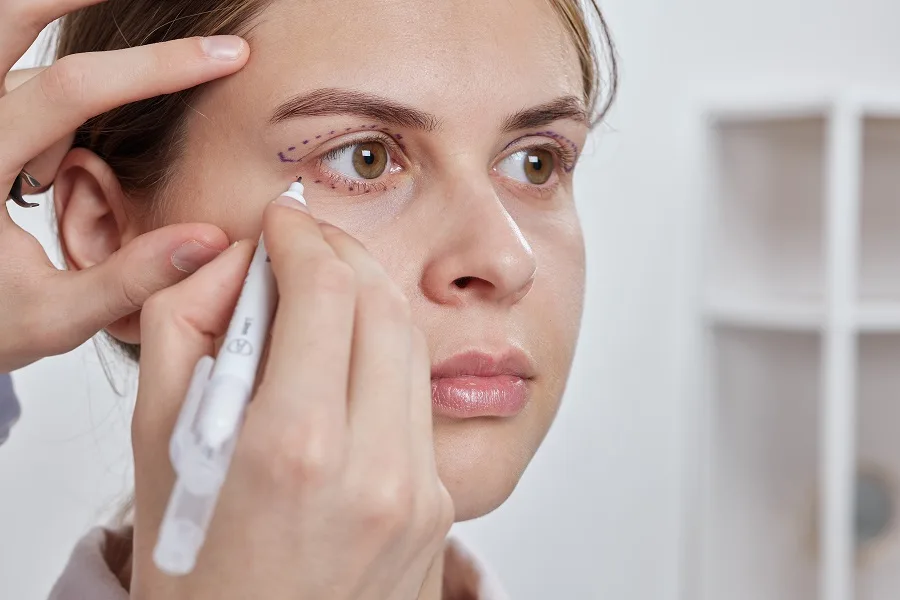
- Measure eyelid position and evaluate how much skin overlaps the pupil
- Document vision complaints and how they affect daily activities
- Identify the cause of eyelid drooping, whether excess skin (dermatochalasis), muscle weakness (ptosis), or brow sagging (brow ptosis)
This evaluation determines whether your symptoms are caused by eyelid anatomy or another condition that may require a different treatment plan.
Required Testing and Documentation
You will complete visual field testing at your ophthalmologist’s office, where a technician measures peripheral vision in a standardized way. The test is performed twice, once with the eyelids in their natural position and once with the excess skin gently taped upward. Your doctor’s office will also take standardized external photographs from multiple angles to document eyelid position.
Important note: Keep records of all testing dates, results, and documentation in case you need to appeal a denial or switch insurance providers.
Pre-Authorization Submission
Your surgeon’s office compiles medical records, test results, and photographs into a complete submission for your insurance company. This pre-authorization request asks the insurer to review your case and determine coverage before surgery is scheduled. While pre-authorization offers meaningful reassurance, it does not guarantee final approval since some insurers perform a second review after surgery.
Medicare Coverage for Blepharoplasty

Medicare follows slightly different processes than private insurance but maintains similar medical necessity standards.
Medicare-Specific Guidelines
Medicare does not offer pre-authorization for any procedures, including eyelid surgery. However, Medicare publishes clear coverage criteria that experienced oculoplastic surgeons know well. Your doctor can assess whether your case meets these standards based on exam findings and testing, though approval is not confirmed until Medicare processes the claim after surgery.
ABN (Advanced Beneficiary Notice) Requirements
Because Medicare does not pre-approve procedures, your surgeon will usually ask you to sign an ABN form. This document explains that although your doctor expects Medicare to cover the surgery, you agree to pay if the claim is denied. Surgeons are generally accurate in their assessments, but the ABN protects both you and the practice if an unexpected denial occurs.
Cost Considerations and Out-of-Pocket Expenses
Even with insurance approval, you'll likely face some expenses for your eyelid surgery.
Covered vs. Non-Covered Components
Insurance typically pays for the functional portion of upper eyelid surgery when medical necessity criteria are met. If you choose cosmetic enhancements beyond what is required to restore vision, those portions are paid out of pocket. Lower eyelid procedures almost always require self-payment because insurers classify them as cosmetic.
For those considering non-surgical options, exploring first Botox treatments can provide temporary improvement while you decide on surgical intervention. If you're planning to pay privately, reviewing blepharoplasty costs in Chicago helps you budget appropriately.
Insurance Denial and Appeal Options
If your insurance company denies coverage at first, you still have the right to appeal. Your surgeon can submit additional documentation, updated photographs, or repeat test results to reinforce medical necessity. Many denials happen because information was incomplete rather than because you truly did not qualify, which is why appeals succeed more often than patients expect.
Ready to Explore Your Coverage Options?
Insurance coverage for blepharoplasty is based on documented medical necessity, not cosmetic preference. When drooping eyelids measurably limit vision and interfere with everyday activities, proper testing and thorough documentation can support approval for covered surgery.
Dr. Amjad Z. Ahmad's practice specializes in both functional and cosmetic eyelid procedures, with extensive experience navigating insurance requirements for medically necessary cases. As a fellowship-trained Chicago eyelid surgeon, Dr. Ahmad can evaluate your specific situation and guide you through the insurance approval process. Contact us today to schedule your comprehensive consultation and discover whether your condition qualifies for coverage.
%202.avif)
Want to See Actual Results?
Browse our gallery of images of eyelid surgery covered by insurance to visualize the functional improvements possible when medical necessity criteria are met.
%202.avif)
Discover If Your Eyelid Surgery Qualifies for Coverage
Drooping eyelids affecting your vision? Our team guides you through the insurance process with thorough testing and documentation that meet medical necessity requirements.
Frequently Asked Questions
How do I know if my eyelids qualify?
Your eyelids must cause measurable vision obstruction, not simply appear heavy or hooded. An evaluation with an oculoplastic surgeon includes precise measurements and visual field testing. If your eyelids fall within 2 millimeters of the pupil and testing shows meaningful improvement when lifted, you may qualify for coverage.
Will insurance cover revision surgery?
Insurance rarely covers revision procedures unless new functional problems develop after your initial surgery. If your first surgery was cosmetic and self-paid, insurance won't cover complications or unsatisfactory results. However, if new drooping occurs years after a covered procedure due to aging or other factors, you may qualify again if you meet medical necessity criteria.
Can I combine cosmetic and functional surgery?
Yes, many patients address functional and cosmetic concerns during the same operation. Insurance covers the medically necessary portion, such as removing excess skin that blocks vision, while cosmetic enhancements like lower eyelid treatment or additional skin removal are paid out of pocket.